A buyer I spoke with recently put it bluntly: "Every project in Gurgaon calls itself luxury. Why should I trust this one?" That's a fair question, and it's exactly what this article tries to answer for Birla Arika Phase 2.
I'm not going to repeat the brochure lines about location and amenities that every listing site already has. Instead, this is my honest breakdown of why invest in Birla Arika Phase 2, who it actually suits, and where I'd tell a buyer to slow down and ask more questions before signing anything.
Quick facts before we go deeper:
Developer: Birla Estates (Aditya Birla Group)
Location: Sector 31, Gurgaon, off NH-48
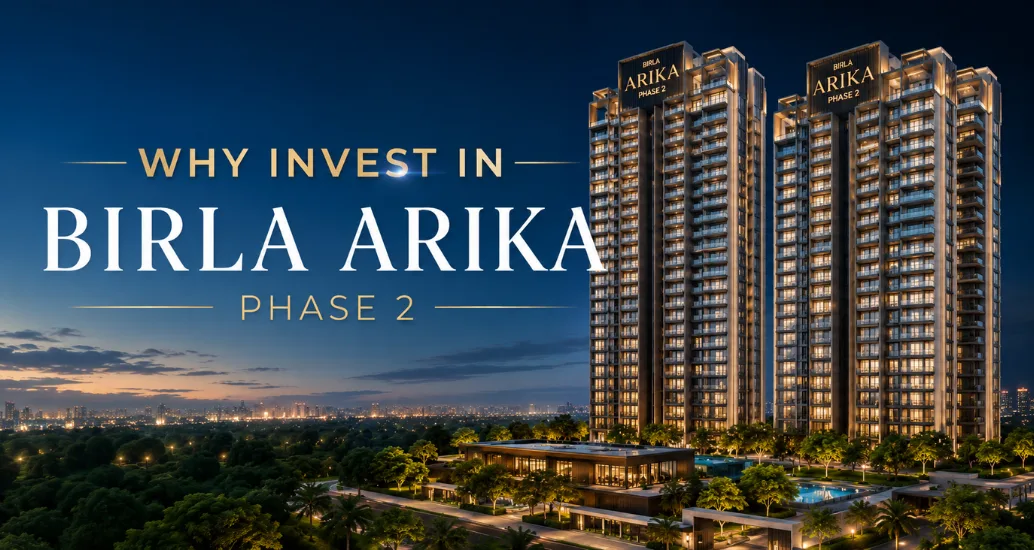
Phase 2: 2 towers, around 160 units, G+40 floors
Land parcel: Roughly 13.25–13.5 acres across the full project
Unit type: 4 BHK with staff room, two apartments per floor
Certification: IGBC Gold rated
Price, exact payment plan, and RERA numbers vary across listing platforms and are not confirmed on this page. Verify directly with Birla Estates or the Haryana RERA portal before booking.
There’s no place like home:
Is This the Right Time to Invest in Birla Arika Phase 2?
This is the question I get asked more than any other, so let's tackle it head-on instead of burying it in the middle of the article.
Gurgaon's luxury housing segment has been busy over the past couple of years. Multiple large developers, DLF, M3M, Smartworld, and now Birla Estates, have all launched ultra-luxury 4 BHK and 5 BHK projects within a short span of each other. That tells you two things. Demand at the top end of the market is real, not speculative. But supply is also increasing fast, which means not every launch will perform the same way.
Here's how I'd think about demand versus supply for this specific project. On the demand side, Sector 31 has almost no new land left for a project of this scale, so once Phase 2 sells out, there's genuinely nothing comparable coming to compete for the same buyers in the same location. That's a real supply constraint, not a sales pitch. On the supply side, buyers today have more ultra-luxury choices across Gurgaon than they did five years ago, so developers can't assume buyers will wait around indefinitely.
Why now, if you're seriously considering it: Early-phase pricing in a project like this is usually lower than what it will cost once construction progresses and inventory shrinks. Phase 1 already sold through strongly, and Phase 2 has fewer units, 160 against Phase 1's 322, in a location that isn't getting any more land. If you're already convinced this is the right project for you, waiting rarely gets you a better price in a scarcity-driven micro-market.
Why you might wait instead: If the official price list, payment plan, and RERA registration for Phase 2 aren't fully confirmed yet, buying purely on urgency is how people overpay or commit to unclear terms. There's a real difference between "this location won't get less scarce" and "you must decide today." Take the time you need to verify facts, even if that means missing the earliest pricing.
The honest answer to "is this the right time" is: it depends on whether you've already done the work of confirming price, RERA status, and payment terms. If you have, and the project fits your budget and goals, timing works in your favour right now. If you haven't, no amount of urgency should push you to skip that step. This timing question is really at the heart of why invest in Birla Arika Phase 2 comes up so often right now, rather than a year from now.
What Makes Birla Arika Phase 2 Different?
Most Gurgaon launches compete on the same three things: location, amenities, and floor plans. Birla Arika Phase 2 is trying to compete on something harder to fake, which is density.
The project sits on roughly 13.25 to 13.5 acres, but only two apartments share each floor across its towers. That's an unusual ratio for a high-rise this tall. Most towers of 40-plus floors pack in four, six, or even eight units per floor to make the economics work. Birla Estates chose the opposite path here.
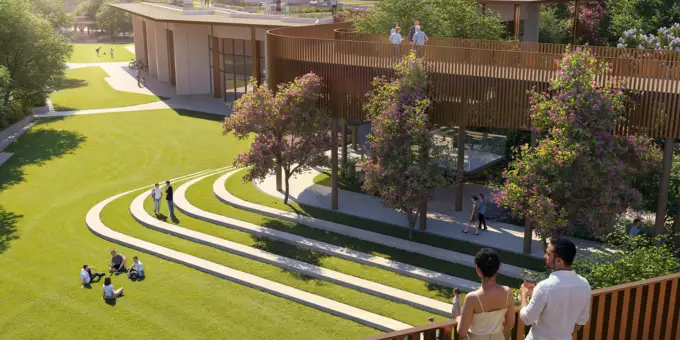
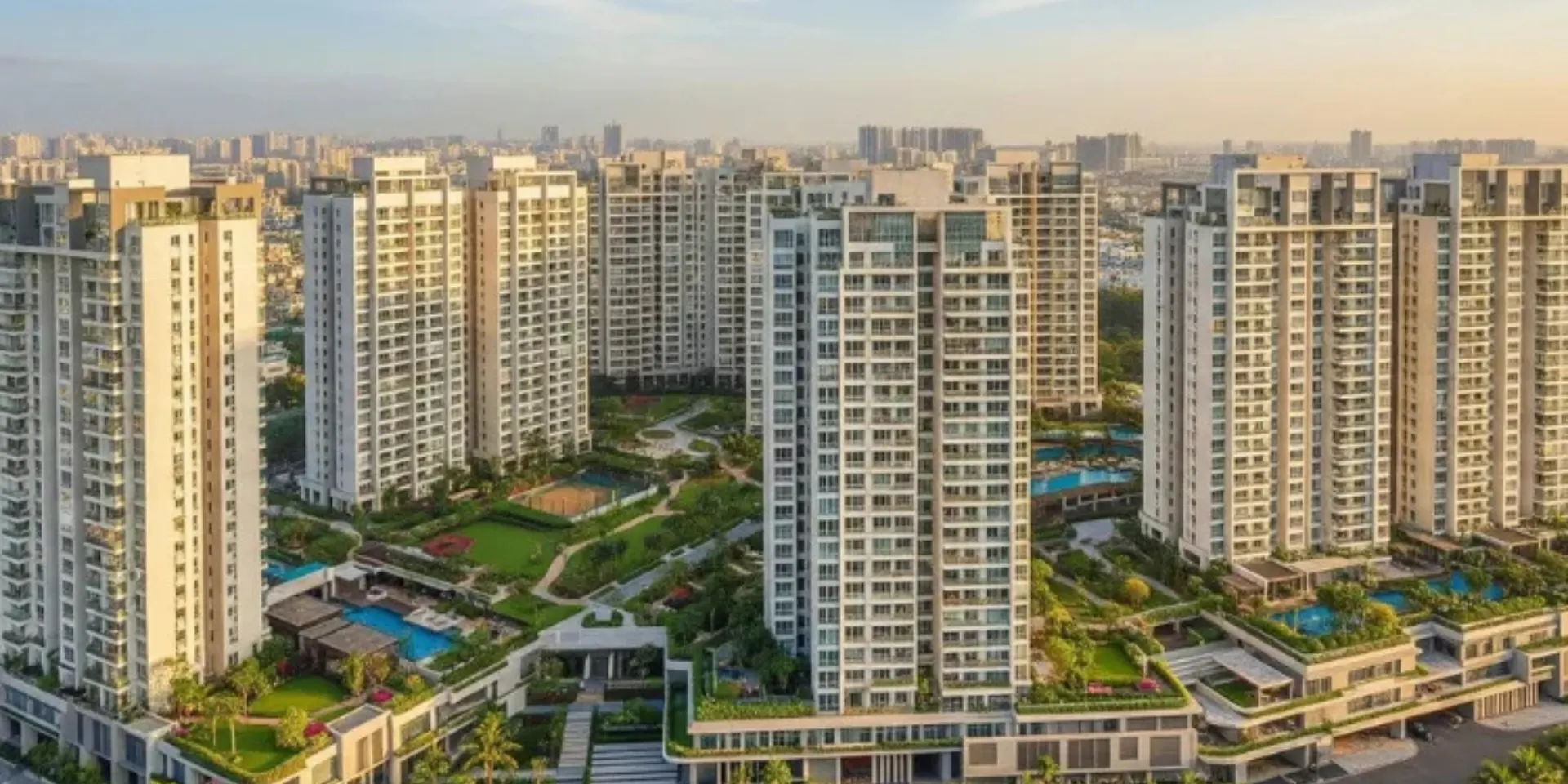
Phase 2 specifically adds two towers and around 160 units to the existing development, which already has 322 units across four towers in Phase 1. A large chunk of the land, close to 7.4 acres, is kept as central green space, including a dedicated private forest zone introduced in Phase 2. The project also holds an IGBC Gold rating, which is a real, third-party sustainability certification, not just a marketing phrase.
So when people ask why invest in Birla Arika Phase 2 over a denser project nearby, the honest answer is: you're paying for space and privacy that most towers this height simply don't offer.
Why Sector 31 Gurgaon Is a Strong Investment Location
Sector 31 works for two reasons that matter more than "good connectivity," which is the line every listing repeats without explaining it.
First, it's centrally located and already built up. This isn't a sector waiting for infrastructure to catch up over the next decade. Roads, hospitals, schools, and malls around it are already functioning. Reported travel times put Rajiv Chowk about 5 minutes away, IFFCO Chowk metro station around 8 minutes, Cyber City roughly 10 to 15 minutes, Golf Course Road about 15 minutes, and IGI Airport around 20 to 25 minutes via NH-48. Even accounting for Gurgaon traffic variability, that's a genuinely central address.
Second, and this is the part buyers underestimate, there's very little room left in Sector 31 for new large-scale gated developments. It's one of the last pockets in Gurgaon's original sector grid where a 13-acre project like this is even possible. That scarcity matters for long-term value more than any amenity list does, because you can't build a competing project next door once the land runs out.
Reputed hospitals like Medanta and Fortis, along with malls such as Ambience, are within easy reach. For an end-user, that's daily convenience. For an investor, it's what keeps resale demand steady even when newer, less-established sectors go through slow phases.
Existing social infrastructure, not promised infrastructure. This is the detail I'd push buyers to think about more. A lot of Gurgaon's newer luxury corridors sell you on what's coming, a planned school, a planned hospital, a planned mall. Sector 31 doesn't need that pitch. Schools, hospitals, markets, and daily conveniences have been operating here for years. You're not betting on a five-year infrastructure timeline playing out as promised.
Corporate demand from an established employment base. Sector 31 already has standalone commercial buildings housing companies like McKinsey and Punj Lloyd, and it sits close to the Unitech Infospace IT/ITES SEZ. That existing corporate presence, combined with proximity to Cyber City and Udyog Vihar, means rental and resale demand isn't dependent on a single upcoming business park actually getting built on schedule.
An affluent, already-formed neighbourhood. Sector 31 has developed into a mature residential market over the years, with builder floors, plotted developments, and established apartment societies already occupied. That matters for a luxury buyer because your neighbours, and your resale buyer pool, are already people who've chosen to live in this income bracket, not a demographic the sector is still hoping to attract.
Long-term premium positioning. Because Sector 31 can't expand its supply the way New Gurgaon sectors can, its long-term positioning tends to stay premium relative to sectors that keep adding fresh inventory. That's not a guarantee of appreciation, but it is a structural reason the location doesn't get diluted the way growth-corridor sectors sometimes do.
Why Birla Estates Inspires Buyer Confidence
Brand matters more in real estate than most people admit, and here's the practical reason why.
Birla Estates is the real estate arm of the Aditya Birla Group, a conglomerate with businesses well beyond property. That parentage gives buyers something smaller, newer developers can't offer: a company with decades of financial history and reputational stakes far bigger than a single project's success.
In practice, this reduces one specific risk that scares luxury buyers more than price does, which is project abandonment. Gurgaon has its share of stalled towers from developers who ran into funding trouble mid-construction. A buyer choosing Birla Estates is making a bet that a group of this size is far less likely to walk away from a project once it's launched, because the reputational cost would extend well beyond real estate.
Delivery philosophy matters more than launch-day promises. Birla Estates builds around what it calls a "LifeDesigned" approach, essentially planning every space in a home to serve a real, practical purpose rather than just looking good in a brochure render. Whether that philosophy fully translates into the finished product is something you should verify on a site visit, not just take on faith, but it's a more specific claim than the generic "luxury lifestyle" language most developers use.
Construction quality signals to check yourself. Don't just take certification claims at face value. Ask to see the current construction stage in person or through verified photos, check whether Phase 1 towers were delivered close to their original timeline, and ask for the specification sheet on materials, flooring, fittings, so you can compare what's promised against what's actually being installed.
Long-term ownership confidence comes from track record, not branding. A group backed by a larger conglomerate has more capacity to absorb cost overruns without abandoning a project, but that's a general industry pattern, not a guarantee specific to this developer. The way to build real confidence is to look at how Birla Estates has handled its other residential launches, not just this one.
That said, brand trust isn't a substitute for due diligence. Ask for construction progress updates, check RERA compliance status directly on the Haryana RERA portal, and don't skip this step just because the parent group is well known.
Why Invest in Birla Arika Phase 2: Key Reasons Worth Weighing
Let's get specific instead of generic. Here's what actually holds up when you look closely.
The Short Version: Why Invest in Birla Arika Phase 2 Right Now
If you only remember one thing, remember this: it's the density and the land scarcity, not the amenity list, that make this project worth a serious look. Everything below builds on that.
Low density is a genuine differentiator, not a marketing line. Two apartments per floor across 40-plus storey towers is rare. It means less lift congestion, more privacy, and better natural light exposure per unit, all things that directly affect daily living quality and, eventually, resale appeal.
The location has scarcity value. Sector 31 has almost no remaining land for large gated developments. Once inventory like this is sold out, there won't be a comparable new project competing directly for the same buyer pool in the same pocket.
Phase 1 reportedly saw strong buyer response. Industry publications have cited that Phase 1 recorded bookings well above ₹3,000 crore within weeks of its launch, which suggests real market confidence rather than speculative hype alone. Treat this as a demand signal, not a guarantee that Phase 2 will perform identically.
The green space commitment is unusually high for a high-rise project. Around 75% open space and close to 58% dedicated greenery, including a private forest zone in Phase 2, is a meaningful difference from typical dense high-rise developments in the same price bracket.
Institutional backing reduces execution risk. Being part of the Aditya Birla Group doesn't eliminate risk, but it does lower the odds of the kind of construction delays that plague under-capitalised developers.
None of this replaces checking the numbers yourself. But these are the reasons that actually hold weight, as opposed to repeating "great amenities" without explaining why that matters.
Infrastructure and Connectivity: What It Actually Means for Value
Connectivity gets mentioned in every listing, but here's how it actually feeds into investment value, not just daily convenience.
Properties near established business districts tend to hold rental demand even during slow property markets, because corporate tenants and relocating executives prioritise commute time over almost everything else. Sector 31's proximity to Cyber City, DLF's business districts, and Udyog Vihar means the tenant pool isn't limited to one industry or one company's hiring cycle.
Metro connectivity also matters for resale liquidity. A property near an existing or planned metro corridor, in this case linked toward the IFFCO Chowk and broader Millennium City Centre network, tends to attract a wider buyer base than one that depends entirely on private vehicles.
The other factor worth mentioning is road capacity. NH-48 is a major arterial road, and Sector 31's direct access to it means the location isn't dependent on narrower internal roads that get congested as an area develops further.
Lifestyle and End-User Benefits
If you're buying this to live in, not just invest, here's what actually changes your day-to-day experience.
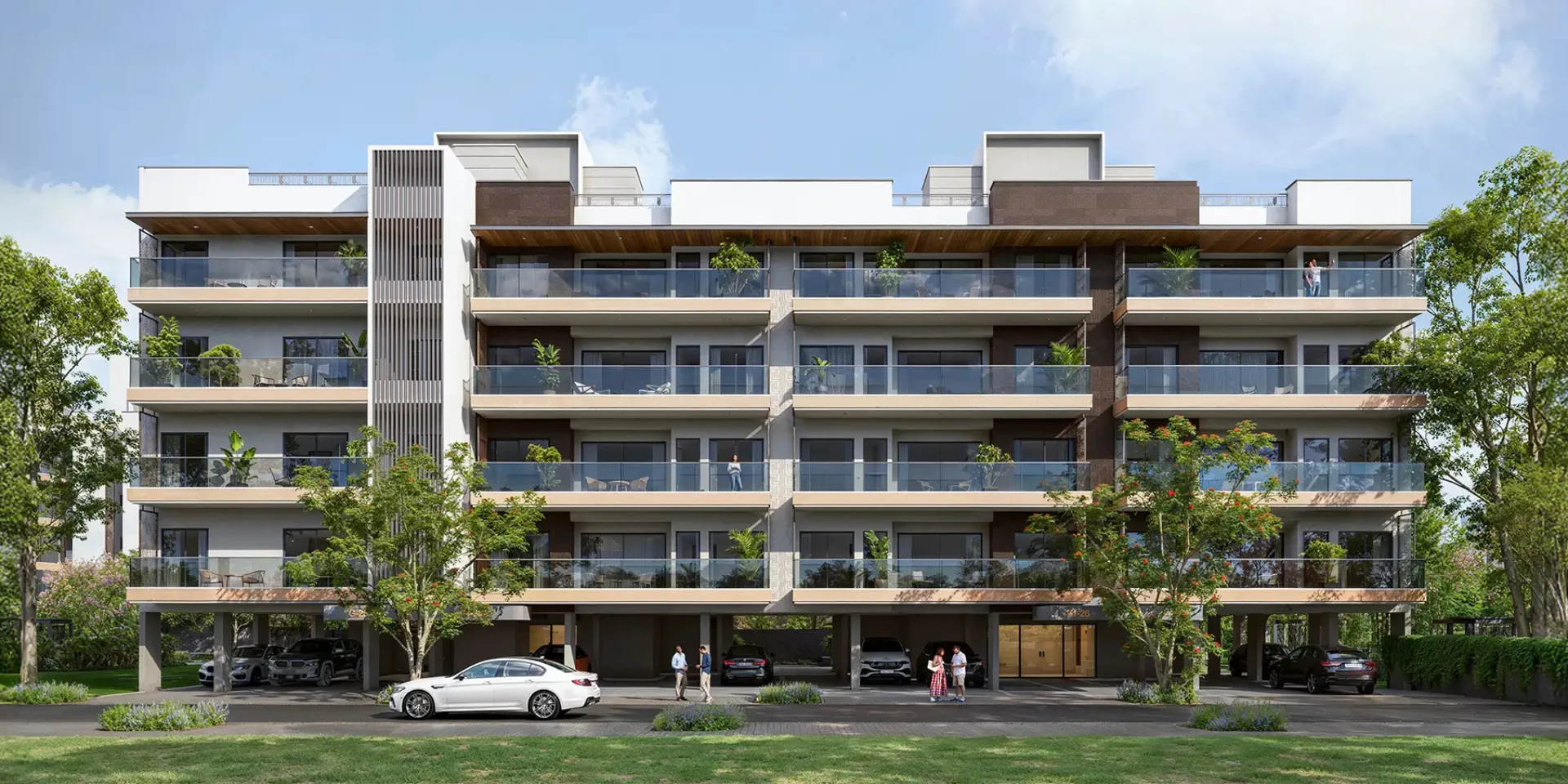
Because each floor holds only two apartments, you're not sharing lifts, lobbies, or corridors with dozens of neighbours. That's a real quality-of-life difference in a city where most luxury towers pack far more units per floor.
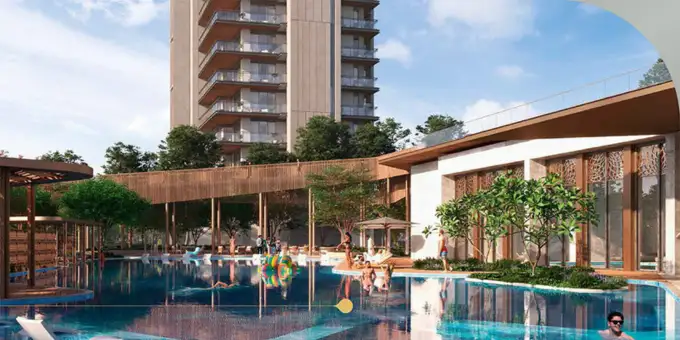
The amenity list is broad. It reportedly includes a fitness club with a gym, yoga and pilates studio, and swimming pools; a social and entertainment club with a private theatre and community hall; a sports club covering tennis, squash, and badminton; and a dedicated kids' club with indoor play areas and a library. There's also an elevated walkway connecting different zones of the project, along with meditation decks, a pet park, and nature trails.
For families specifically, having schools, hospitals, and malls already established nearby, instead of "upcoming" per the brochure, removes a lot of the guesswork that comes with buying into a newer, still-developing sector.
Long-Term Investment Potential and Capital Appreciation Factors
Here's where I'll be direct: nobody can responsibly promise you a specific appreciation percentage, and you should be skeptical of anyone who does.
What can be said is this. Sector 31's land scarcity limits future competing supply, which is one of the more reliable long-term price supports in real estate. Established micro-markets with limited new land tend to see steadier appreciation than sectors still being built out, simply because supply can't flood the market the way it can elsewhere.
Branded, low-density developments from established groups also tend to hold resale value better than generic high-density towers, because the buyer pool at resale is looking for the same scarcity and privacy that attracted the original buyer.
That said, appreciation depends on macro factors too, interest rates, broader NCR demand, and how the completed project actually delivers on its current promises. Treat any specific return percentage you see quoted elsewhere with caution unless it comes directly from a verified, dated source.
Rental Demand Potential
Rental demand here is driven mainly by one thing: proximity to employment hubs. Cyber City, DLF's business districts, and Udyog Vihar are all within a reasonably short commute, which historically supports demand from corporate tenants, especially mid-to-senior executives who prioritise a shorter, more predictable commute over a larger apartment further out.
Large-format 4 BHK units also tend to attract a specific tenant profile: families or senior executives who need space, rather than the single-professional rental market that smaller units compete for. That's a narrower pool, but it's typically a more stable one, since these tenants relocate less frequently.
There's also a practical point worth mentioning. Companies relocating senior staff to Gurgaon often look for exactly this kind of property: large, private, close to work, and backed by a recognisable developer name. That combination isn't common at scale in the city, which works in this project's favour for corporate leasing specifically, as opposed to the broader retail rental market that smaller apartments compete in.
As always, actual rental yield depends on the final price you pay and prevailing rental rates once the project is delivered. Nobody can accurately project yield years before possession, and any specific yield percentage quoted to you now should be treated as a rough estimate at best.
Why Do HNIs Actually Buy Branded Residences?
I get this question a lot, usually phrased as "isn't this just paying extra for a name?" It's a fair thing to ask, and the honest answer is more layered than a simple yes or no.
It's rarely just about the amenities. Most ultra-luxury projects in Gurgaon now offer similar swimming pools, clubhouses, and gyms, so amenities alone don't explain why a buyer picks one branded project over another. What actually drives the decision is closer to trust plus identity.
Trust, because a recognisable developer name reduces the fear of the two things that scare luxury buyers most: construction delays and outright project failure. When you're putting down several crores, the reputational stake a large group has in delivering on time matters more than any single amenity.
Identity, because at this price point, the address itself becomes part of how a buyer is perceived, by business contacts, by family, by their own sense of having arrived. That's not irrational. It's simply a different kind of value than square footage or gym equipment, and it's worth being honest about rather than pretending every luxury purchase is a purely financial decision.
For Birla Arika Phase 2 specifically, the psychological pull comes from two things working together: the Birla name carrying decades of trust across industries beyond real estate, and Sector 31's already-established, affluent character. Buyers aren't just buying a home. They're buying into a location and a name that won't need to prove themselves over the next decade the way a newer project in an unproven sector would.
What Does ROI Actually Mean for Birla Arika Phase 2 Buyers?
When people ask about ROI, they usually mean one thing: how much will the price go up. But that's only one piece of a bigger picture, and treating it as the whole picture leads to disappointment.
Capital appreciation is the most talked-about component, and also the one I'd caution you most about. Sector 31's land scarcity supports long-term value, but nobody can responsibly hand you a specific percentage. Ignore any number quoted without a dated, verifiable source behind it.
Lifestyle ROI doesn't show up in a spreadsheet, but it's real for end-users. Two units per floor, established social infrastructure, and a central location save you time and stress every single day you live there. If you're buying to live in the home, this is arguably the most immediate return you get, even before the market moves at all.
Rental demand contributes a different kind of return, a steady income stream if you choose to lease the property, supported by corporate tenants working in Cyber City and Udyog Vihar. This tends to be more predictable than price appreciation, though it still depends on final pricing and market rental rates at possession.
Brand premium is the return that's hardest to quantify but shows up most clearly at resale. Branded, low-density projects from established developers generally hold value better and sell faster than generic towers, because the buyer pool at resale is looking for the same reassurance the original buyer was.
Put together, ROI here isn't one number. It's a combination of how much you value daily living quality, how reliable you need rental income to be, and how much weight you put on brand-backed resale ease, on top of whatever price appreciation eventually happens.
Who Should Invest in Birla Arika Phase 2?
Based on everything above, this project generally suits a specific type of buyer.
End-users who want space and privacy and are comfortable paying a premium for low-density living instead of maximising square footage per rupee.
Long-term investors who understand that Sector 31's value proposition is scarcity and location, not short-term flipping potential.
NRI buyers looking for a large-format, branded residence in a centrally located, already-established part of Gurgaon.
Families relocating for work who need proximity to Cyber City and Udyog Vihar without wanting to live inside a dense, high-turnover rental market.
Who May Want to Consider Other Options?
Being honest about fit matters as much as selling the positives. This project probably isn't suitable if you fall into one of these groups:
You want short-term flipping, not long-term holding. Sector 31's value proposition is built on scarcity playing out over years, not quick resale within a year or two of booking. If you're looking to flip within a short window, a fast-growing corridor with more transaction volume may suit you better.
You're stretching a limited budget to reach the luxury segment. If ₹22 crore-plus territory is a stretch rather than a comfortable number, this isn't where you should test that stretch. Overextending on a large-format 4 BHK-only project leaves little room for the usual cost surprises that come with under-construction luxury real estate.
You need immediate possession. This is an under-construction, phase-based launch. If you need a ready-to-move home now, look at completed or nearly-complete projects instead, not a project several years from possession.
You specifically want a 2 or 3 BHK. The project is built exclusively around large-format 4 BHK units with a staff room. There's no smaller configuration to fall back on if your space needs are more modest.
You need full price and payment certainty before committing any money. If price, payment schedule, and possession date all need to be locked and confirmed before you're comfortable moving forward, wait until Birla Estates publishes official, confirmed figures rather than relying on the varying numbers currently circulating across broker listings.
Risks Every Buyer Should Understand
I'd rather list these plainly than let a buyer discover them after paying a token amount.
Pricing isn't officially confirmed. Different listing platforms currently quote different starting prices for the project, which tells you these are broker estimates, not a developer-confirmed rate card. Get the actual current price list directly from Birla Estates before assuming any number you've seen online.
Payment plan details also vary by source. Some platforms list a construction-linked plan, others cite different milestone structures. Confirm the exact plan in writing before paying beyond a token amount.
RERA registration details should be verified independently. Reported RERA numbers differ slightly across sources for Phase 1 and Phase 2. Before making any payment, check the project's actual registration status directly on the Haryana RERA website, haryanarera.gov.in, rather than trusting any single listing site.
Possession timelines in under-construction projects can shift. Multiple sources point to a 2031 possession estimate, but construction-linked timelines commonly move in either direction. Build some buffer into your financial planning rather than assuming an exact date.
High-rise construction at this scale carries execution risk, regardless of developer reputation. Ask for regular construction progress updates once you've booked, and don't rely solely on marketing renders.
Pre-launch risk is a category of its own. Buying at this stage means committing before the final price list, payment plan, and RERA registration for Phase 2 are fully locked. That can work in your favour if prices rise after full launch, but it also means less certainty than buying a project that's already well into construction with all approvals in place.
Real estate moves in cycles, and luxury moves in wider ones. The ultra-luxury segment tends to see sharper swings than the broader housing market, both up and down, because it depends more heavily on HNI sentiment and liquidity conditions than on general housing demand. Buying near a market peak versus buying during a quieter phase can meaningfully affect your eventual returns, and nobody can time this perfectly.
Understand your likely holding period before you commit. Ultra-luxury 4 BHK properties in this price band aren't quick, liquid assets. Between construction time and the kind of buyer pool that can afford resale at this level, a comfortable holding period is usually measured in years, not months. If you might need to exit quickly for cash-flow reasons, this isn't the right asset class for that need.
Liquidity in the luxury segment is thinner than in mid-segment housing. There are simply fewer buyers who can afford a large-format luxury 4 BHK, which means it can take longer to find a resale buyer at your target price compared to a mid-segment 2 or 3 BHK. Factor this into your planning rather than assuming you can sell quickly whenever you choose to.
Why Birla Arika Instead of DLF Privana, M3M Altitude, Trump Residences, or Smartworld One DXP?
Birla Arika Phase 2 (Sector 31)
DLF Privana (Sector 76–77)
M3M Altitude (Sector 65)
Trump Residences (Sector 69)
Smartworld One DXP (Sector 113)
Developer
Birla Estates
DLF
M3M India
Smartworld, Tribeca, Trump Organization
Smartworld Developers
Location belt
Central Gurgaon, near NH-48
New Gurgaon, near SPR/Dwarka Expressway
Golf Course Extension Road
SPR, near Dwarka Expressway
Dwarka Expressway, Delhi border
Land parcel
~13.25–13.5 acres
~25 acres
~4 acres
~11.66 acres
~16 acres
Density
2 units per floor
Low-density township format
Boutique high-rise, compact footprint
1 unit per floor, twin towers
Higher-volume, ~900 units across the project
Unit type
4 BHK + staff room only
4 & 5 BHK
4 & 5 BHK
3 & 4 BHK
2.5 to 4.5 BHK
Positioning
Established sector, land-constrained scarcity play
New luxury township, resort-style low density
Ultra-luxury boutique tower on an established luxury road
Global brand association, ultra-exclusive tower
Larger-scale luxury on a fast-growing expressway corridor
A few honest takeaways from this table. DLF Privana competes on scale and resort-style low density in a still-developing New Gurgaon pocket, so it suits buyers betting on that corridor's growth. M3M Altitude is a much smaller, boutique tower on an already-prestigious road, appealing to buyers who want maximum exclusivity in a proven location. Trump Residences leans entirely on global brand association and near-total privacy with one unit per floor, at a price that reflects that exclusivity. Smartworld One DXP plays a different game altogether, more units, a fast-growing expressway corridor, and comparatively more accessible entry pricing.
Birla Arika Phase 2 sits in its own lane. It's not the largest, not the most exclusive on a per-floor basis compared to Trump Residences, and not on the newest growth corridor. What it offers instead is an established, land-constrained central location that none of these other projects can replicate, because none of them are in Sector 31. If central location and long-term scarcity matter more to you than being on the newest growth corridor or having the single most exclusive floor plan in the city, that's where Birla Arika Phase 2 pulls ahead.
Future Infrastructure Near Sector 31: What's Actually Verified
I'll keep this section short and honest, because a lot of listings pad this out with vague promises. Here's what's actually confirmed versus what's still speculative.
Confirmed infrastructure already in place: Sector 31 sits directly on NH-48, with the Millennium City Centre metro station, formerly HUDA City Centre, roughly 4 to 5 km away on the Delhi Metro Yellow Line. This connects the area to Cyber City, MG Road, and Central Delhi. Established hospitals, schools, and commercial buildings are already operating in and around the sector, not planned for the future.
A verified upcoming project worth knowing about: Gurugram Metro Rail Limited has an approved metro expansion, roughly 28.5 km with around 27 to 28 stations, designed to connect Old Gurgaon to Cyber City and the newer sectors. This is a government-backed project with joint funding from the central and Haryana state governments, not a developer's marketing claim.
What this could mean for property values: Better transit links between established central sectors and newer business districts generally support steadier resale demand over time, since it widens the pool of areas a resident can commute to easily. That said, I won't quote you a specific appreciation percentage tied to this project, because construction timelines for large metro projects often shift, and property value impact depends on far more than one infrastructure line. Treat this as a supporting factor, not a guaranteed catalyst.
If you see a listing promising a specific appreciation percentage tied to "upcoming infrastructure," ask for the source. If they can't name one, treat the number as marketing, not analysis.
Investment Strategy: Different Advice for Different Buyers
There's no single "right" way to approach this project. Here's how I'd frame it for different buyer types.
For the investor: Focus on the scarcity argument, not short-term price movement. Confirm the official price list and payment plan before committing, and go in expecting to hold for several years rather than looking for a quick flip. Sector 31's limited land supply is your main thesis here, so make sure that logic still holds by the time you're ready to buy.
For the end-user: Prioritise the lifestyle factors, density, established social infrastructure, and commute time to your workplace, over chasing the absolute lowest price per square foot. You're the buyer type this project is actually built for, given its large-format, low-density design.
For the NRI buyer: Pay close attention to the developer's reputation and RERA compliance, since you likely can't do frequent site visits yourself. Ask about a trusted local representative or legal advisor who can verify construction progress and documentation on your behalf before each payment milestone.
For the HNI buyer: Weigh brand and identity value honestly alongside the numbers. If the Birla name and Sector 31 address genuinely matter to how you want to be perceived or where you want to be based, that's a legitimate part of your decision, not something to be embarrassed about factoring in.
For the family buyer: Look closely at the existing schools, hospitals, and daily convenience infrastructure, since this project's biggest advantage over newer corridors is that these things already exist and work, rather than being promised for some future date.
Common Mistakes Buyers Make With Luxury Property
I've watched buyers make the same mistakes repeatedly, so here's what I'd tell you to avoid.
Looking only at the headline price. A lower quoted price from one broker versus another often hides differences in floor, view, carpet area calculation, or additional charges. Compare like-for-like, not just the number that sounds best.
Ignoring builder reputation in favour of amenities. A beautiful sample flat doesn't tell you whether a developer has a track record of delivering projects on time. Check delivery history before you check the swimming pool design.
Not researching future location growth. Buyers often evaluate a location based on what it looks like today, without asking whether nearby land can absorb new competing supply, or whether the area is already at capacity the way Sector 31 is. Both scarcity and growth potential matter, but for different reasons, and confusing the two leads to bad comparisons.
Skipping independent RERA verification. Trusting a broker's word on RERA status instead of checking haryanarera.gov.in directly is one of the most common and easily avoidable mistakes in Gurgaon real estate right now, especially with a pre-launch project where numbers vary by source.
Underestimating the holding period needed. Many buyers in the luxury segment assume they can exit quickly if needed. Given the thinner buyer pool at this price point, that assumption often doesn't hold, and buyers end up needing to sell at a discount if they're forced to exit sooner than planned.
Letting urgency override due diligence. Sales teams often create time pressure around EOI deadlines or "limited units remaining." Scarcity in the underlying location is real here, but that doesn't mean you need to skip verifying price, RERA, and payment terms just because someone tells you to hurry.
Expert Perspective
If a client asked me directly, here's what I'd say. Birla Arika Phase 2 is one of the more credible low-density luxury plays in central Gurgaon right now, mainly because of the land scarcity in Sector 31 and the backing of an established group. That combination is genuinely hard to replicate.
What I wouldn't do is rely on any specific price, payment plan, or possession date currently floating around online, because none of it is consistent across sources. Get the real, current numbers from Birla Estates directly, confirm RERA status independently, and then decide if the premium for space and privacy is worth it to you. For the right buyer, it usually is. For someone stretching their budget to get in, it's worth waiting for full clarity first.
How to Evaluate Premium Projects Like This One
Most buyers evaluate luxury projects the wrong way. They start with the amenity list and the sample flat, and they end with the price. I'd flip that order.
Start with the land. How much of it exists, how much is actually open, and how much room is left around it for future competing supply. Sector 31 scores well here simply because there isn't much land left for another project of this scale. That's a structural advantage no amenity list can replicate.
Next, look at density before you look at design. A beautifully designed lobby doesn't matter much if you're sharing it with six other families on your floor during peak hours. Two units per floor, as Birla Arika Phase 2 offers, is a genuinely rare configuration at this tower height, and it directly affects daily living quality in a way brochures rarely explain properly.
Then check the developer's balance sheet strength, not just their marketing budget. A group backed by a larger conglomerate, like Birla Estates under the Aditya Birla Group, generally has more capacity to absorb construction delays or cost overruns without stalling the project entirely. Smaller, thinly capitalised developers don't always have that cushion.
Only after all this should price enter the conversation. And even then, compare price per square foot against genuinely comparable low-density projects in similarly established sectors, not against high-density towers that pack in far more units per acre. Comparing unlike projects on price alone is how buyers end up overpaying for the wrong thing or underestimating real value.
This framework applies well beyond Birla Arika Phase 2. Use it for any premium Gurgaon project you're evaluating, and you'll ask better questions than most buyers do.
Conclusion: Why Invest in Birla Arika Phase 2
So, why invest in Birla Arika Phase 2? Because it offers something genuinely uncommon in Gurgaon's high-rise luxury segment: real space, real privacy, and a location that's running out of room for new competition. Backed by Birla Estates and positioned in one of Sector 31's last large land parcels, it has the fundamentals that matter for both end-users and long-term investors.
What it doesn't have yet is a single, confirmed price list or payment plan you can rely on across sources. Before you commit any money, get those details directly from the developer, verify RERA status independently, and make sure the premium for low-density living fits your actual budget, not just your aspiration.